


 Turned down by other law firms, a young widow whose husband had been abhorrently ignored by ER doctors at a Florida Hospital turned to Leesfield & Partners for help. Ten months later, Leesfield & Partners was able to secure a multi-million dollar settlement during the claim’s pre-suit period, for the loss of her husband and for her young son’s loss of his father.
Earlier this year, the firm reached another multi-million dollar settlement on behalf of an adolescent girl whose doctor failed to recognize that his patient had sustained a stroke. The doctor’s unbelievable failure to diagnose caused delay in administering known effective treatment. Due to this physician’s negligence, our 17-year-old client was left with permanent cerebral sequelae which have drastically altered the quality of the remainder of her life.
These catastrophic medical malpractice cases were the main target of previous Administrations who actively sought (and succeeded to) limit the recovery of medical malpractice victims through arbitrary and unconstitutional laws. Indeed, since 2003, Justice for medical malpractice victims has been very hard to obtain due to insurance company-friendly laws. Governor Jeb Bush at the time forced the passage of statutory caps for plaintiffs who had been victims of medical malpractice, limiting the monetary compensation they rightfully deserved. The preeminent argument was that malpractice insurance premiums for Florida doctors were skyrocketing and causing good doctors to flee the state as a consequence.
 When Ira Leesfield was attending school in Hollywood, Florida, where he grew up, the Rehabilitation Center at Hollywood Hills did not exist, but the building was part of Leesfield’s paper route and residence area. Leesfield, recipient of the South Broward Professional Women’s award, was shocked reading about the recent gross negligence which caused the tragic death of eight patients at the facility, in violation of Florida Statutes 400.022.
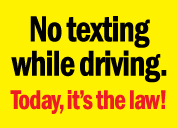 A new study revealed that 92% of motorists use their phone while operating their vehicle. That reality must sink in. Whether you are in traffic, stopped at a red light, making 60mph on the highway, a pedestrian walking across an intersection, a bicyclist on a Sunday morning run, or in an Uber, understand that you are simply 100% at risk of injury. More and more, motorists see being in a moving car as being in a moving elevator: an opportunity to check emails, respond to texts, send a snap, read a story on Facebook, take a selfie to post on Instagram. The obvious difference is one is potentially deadly. This reality will remain true until we
 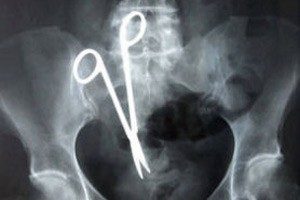 With the prices you pay at the hospital, you shouldn’t have to worry about asinine medical errors. Yet they abound. As quality medicine standard-bearer